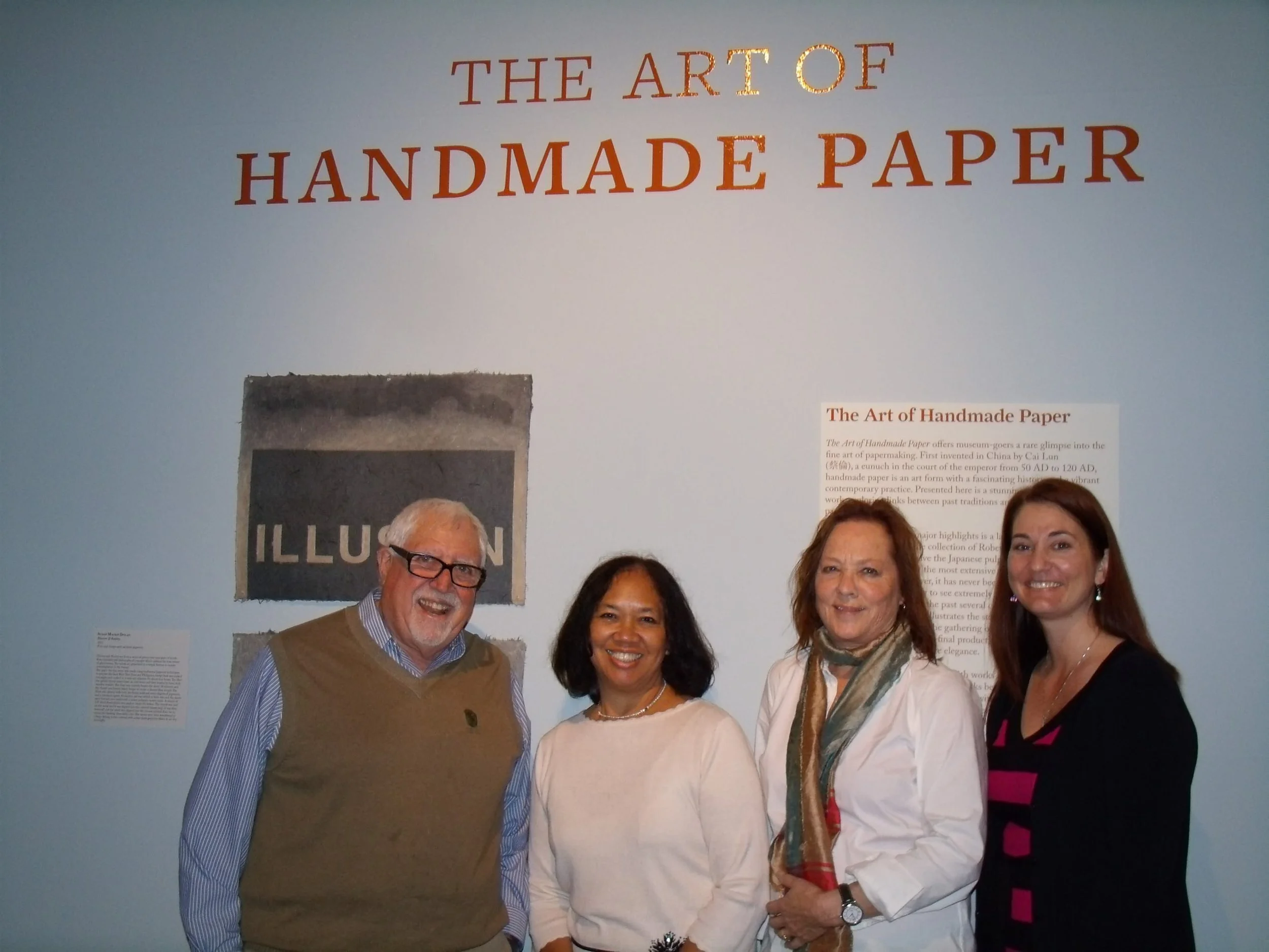
Rooted in curator Simon Blattner’s more than thirty years of experience as a commercial and handmade papermaker, the exhibition grew from his long-held desire to share both the history of paper and the wonder of its making. At a time when digital technology is often predicted to replace print, the exhibition reflected on paper as one of humanity’s most extraordinary and enduring inventions—an essential material that had served civilization for over two thousand years.
The exhibition traced paper’s origins to China and to Cai Lun’s early innovations, which transformed plant fibers, rags, and other cellulose materials into a versatile, affordable, and durable surface for communication. Although the technology spread slowly across the globe, paper ultimately replaced more costly and cumbersome materials such as parchment and stone, becoming fundamental to cultural, intellectual, and daily life.
The exhibition combined historical exploration with hands-on understanding of traditional processes. It featured Richard Seidl’s significant collection of Japanese papers, particularly varieties produced prior to World War II. A highlight was a 21-foot scroll illustrating the ten-step papermaking process, from harvesting mulberry bark to the finished washi paper, based on a centuries-old original. Also on view was a finely crafted split bamboo screen used in sheet formation, along with specialty papers made for uses ranging from textiles to wood veneers. The exhibition included examples of raw materials from around the world, demonstrations of hand papermaking techniques, lectures on paper history, and opportunities for visitors to make paper themselves.
Contemporary American papermakers were also represented, including Amanda Degener, Lynn Sures, John Babcock, Beck Whitehead, Helen Hiebert, Michelle Wilson, Peter and Donna Thomas, and Susan Mackin Dolan. Together, the works in the exhibition demonstrated that papermaking was not merely craft, but an art form of the highest order—one present in everyday life, from grocery bags to books, and as vital to the modern world as it had been to the age of Gutenberg.